
prosplign
The PROSPLIGN project - PROSPecting natural LIGNin biodiversity towards unlocking value-added bioactive motifs and molecules - is a Research and Innovation Action project funded by the Horizon Europe programme and managed by the European Research Executive Agency (REA). The project explores how lignin’s natural “chemical biodiversity” can be turned into high-value bioactive molecules for applications in the pharmaceuticals, cosmetics and fragrances markets. The project combines advanced chemistry, biotechnology and data science to turn an underused side-stream into a new generation of bio-based ingredients.
About the project
PROSPLIGN brings together SMEs, universities and research centres across Europe to systematically explore the bioactivity potential of lignin, a major component of lignocellulosic biomass that is currently mostly burned for energy. By combining state-of-the-art fractionation, analytics and screening platforms, the consortium maps lignin’s molecular diversity and links it to specific biological functions.
The project runs over three years (Jan 2024 to Dec 2026) and covers the full journey from feedstock characterisation and lab-scale process development to preliminary life-cycle and techno-economic assessments.

WHAT AIMS TO ACHIEVE
PROSPLIGN´s main ambition is to unlock lignin as a reliable source of effective bioactive molecules that can substitute fossil-based or animal-derived ingredients in high-value markets. The project develops workflows that move from complex lignin streams to purified bioactive compounds with clearly defined structures, activities and safety profiles.
Identifying bioactive molecules for pharma, cosmetics and fragrance applications, PROSPLIGN aims to demonstrate that lignin can underpin robust value chains rather than remain a low-value fuel. The work includes assessing environmental and socio-economic benefits, so decision-makers can compare new lignin routes with conventional petrochemical pathways.
Ultimately, PROSPLIGN contributes to a broader EU vision where biomass and local biodiversity is used more intelligently, with side-streams upgraded into high-margin ingredients that support green growth and strategic autonomy for Europe’s bio-based industries.

MAGFI’S CONTRIBUTION
Within PROSPLIGN, Magfi is in charge of communication, dissemination and exploitation (DCE) activities (thus both the project “marketing” and “business development” functions). Our team helps the consortium translate complex science into clear narratives that speak to industry, policymakers and the wider public, ensuring that lignin moves from a niche research topic into a visible innovation opportunity, as well as to identify and engage with perspective end users and early adopted of the results of the project.
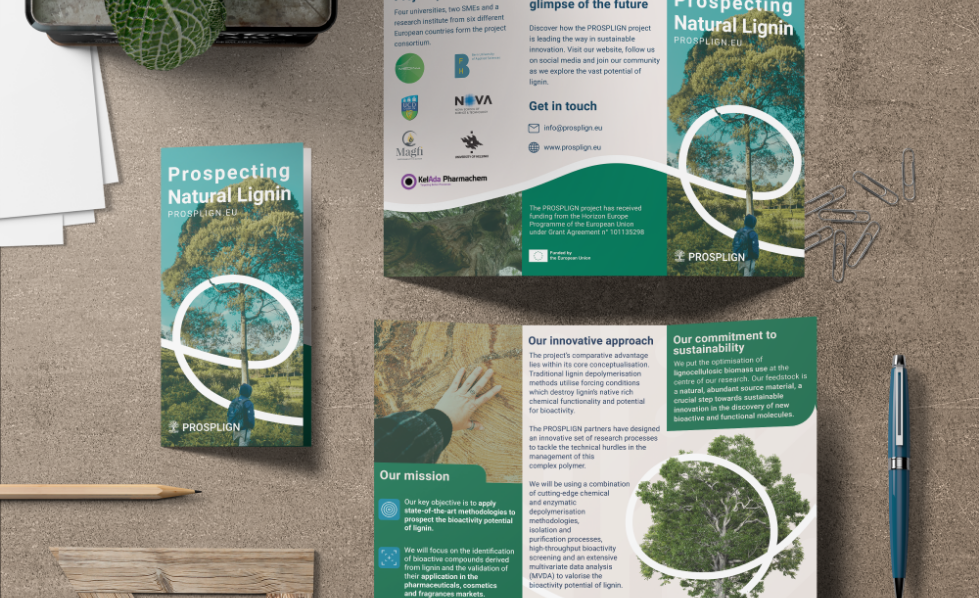
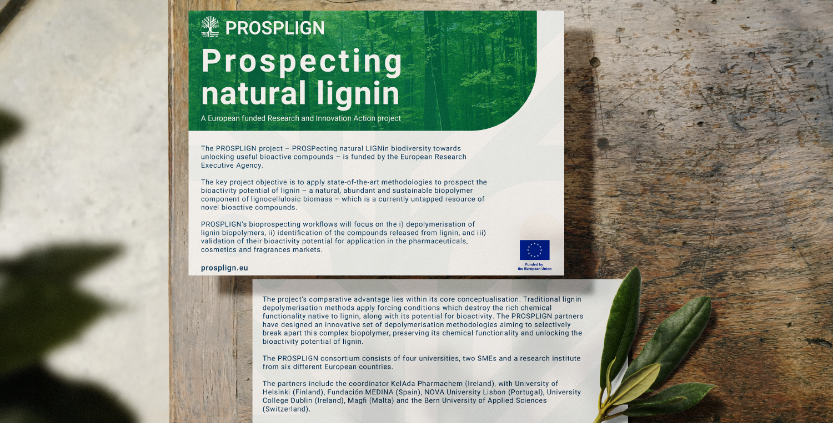
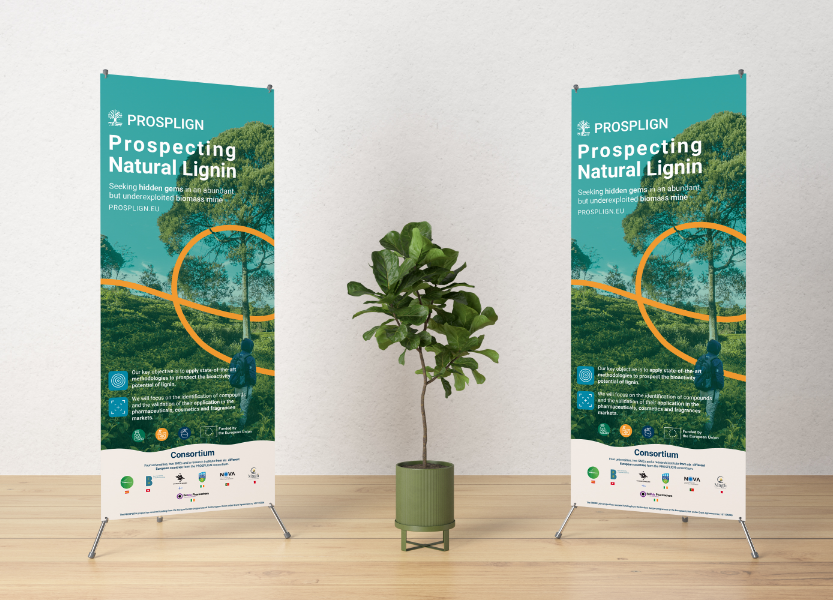
On the marketing (dissemination and communication)-side, Magfi has designed the visual identity and website for PROSPLIGN and supports partners with key messages, storytelling and digital content. This includes explaining “why lignin matters”, how the project’s methods differ from state-of-the-art approaches and what concrete benefits the new ingredients can offer to end-users in the pharmaceutical, fragrances and cosmetic markets.
On the business intelligence and business development (exploitation) side, Magfi contributes to the Key Exploitable Results (KER) definition, ownership allocation, as well as to the definition and activation of relevant exploitation pathways, helping partners the results value proposition towards the right targets and boosting the awareness and interest of the latter for the projects outputs. The goal is to ensure that PROSPLIGN outputs are understood, trusted and ready to attract follow-up collaborations for the partners involved.
For more information on this project, please visit the website: prosplign.eu
ACKNOWLEDGMENT AND DISCLAIMER
The PROSPLIGN project has received funding from the Horizon Europe Programme of the European Union under Grant Agreement n° 101135298.
Disclaimer: Views and opinions expressed are however those of the author(s) of this page only and do not necessarily reflect those of the European Union or the European Research Executive Agency (REA). Neither the European Union nor the European Research Executive Agency (REA) can be held responsible for them.